The story of jerk begins with the Maroons — communities of formerly enslaved Africans who escaped from Spanish and English plantations and fled into the Cockpit Country mountains of Jamaica from the 1600s onwards. To survive in the bush, they hunted wild boar and developed a method of cooking the meat that would become world-famous.
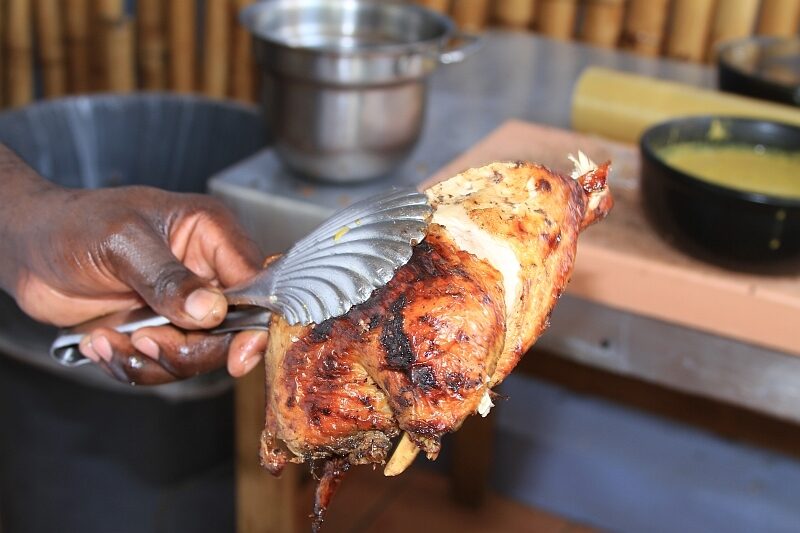
The technique was practical: smoke and slow-cook the meat over indigenous pimento wood, sealing in flavour and allowing it to keep for days without refrigeration. They marinated the pork in the spices that grew around them — pimento (allspice) berries, scotch bonnet peppers, scallion, thyme, ginger, garlic. The smoke kept insects away, masked the cooking smell from slave hunters, and infused the meat with that unmistakable flavour.
The word "jerk" likely comes from the Spanish charqui (the same root as "jerky"), meaning dried preserved meat. Or possibly from the Quechua ch'arki. Either way, the technique is uniquely Jamaican — there is nothing else like it on Earth.
In the 1700s, jerk pork became a cultural symbol of freedom and resistance. By the 20th century, it had spread from the bush to the roadside jerk stands of Boston Bay in Portland — the unofficial jerk capital of Jamaica. From there, it travelled the world.